The Stack · Meta Ads

Meta Ads: buyers before they search,
and the ones who left without filling in the form.

Facebook and Instagram ads do two jobs in a MariaCare pipeline. They put your offer in front of people who are not searching for it yet, and they bring back the visitors who came from an ad or a search and left. Both jobs end at the same place: a form on your site, and a lead in your CRM.

What it is for

Three Jobs, in This Order

Meta is not a second Google. Nobody on Facebook or Instagram is typing what you sell into a search box, so the ad has to earn attention instead of answering a question. That changes what it is good at.

Start here

Retargeting

The visitors who reached your site from Google Ads or a search and left without filling in the form. The Meta pixel remembers the visit; the ad brings them back. This is the first Meta campaign on every account because the audience already knows you.

  • Audience built from your own site traffic, inside your own Meta ad account
  • Form submitters excluded, so nobody who converted keeps seeing the ad
  • Short window: days, not months, with frequency capped
Once retargeting earns it

Prospecting

New people who look like your customers but have not searched yet: by location, by interest, or by resemblance to the customers your CRM has already confirmed. Suits consumer and local businesses; for buyers defined by job title and company, LinkedIn is the better tool.

  • Creative first: the ad has to stop a thumb, so photos and short video, not text
  • One landing page per offer on your WordPress site, never a platform-hosted form
  • Budget earned on cost per customer in your CRM, not cost per click

Underneath both

Organic presence

Before a prospect fills in a form they check that the business is real. A Facebook page and an Instagram profile with recent posts, real photos and answered messages are that check. The ads run from the same page, so the two cannot be separated.

  • Profiles complete and current before the first ad runs
  • Posts are the raw material for ad creative, not a separate project
  • Messages answered: an unanswered inbox costs more than a bad ad

Same pipeline

A Meta Lead Lands Where Every Lead Lands

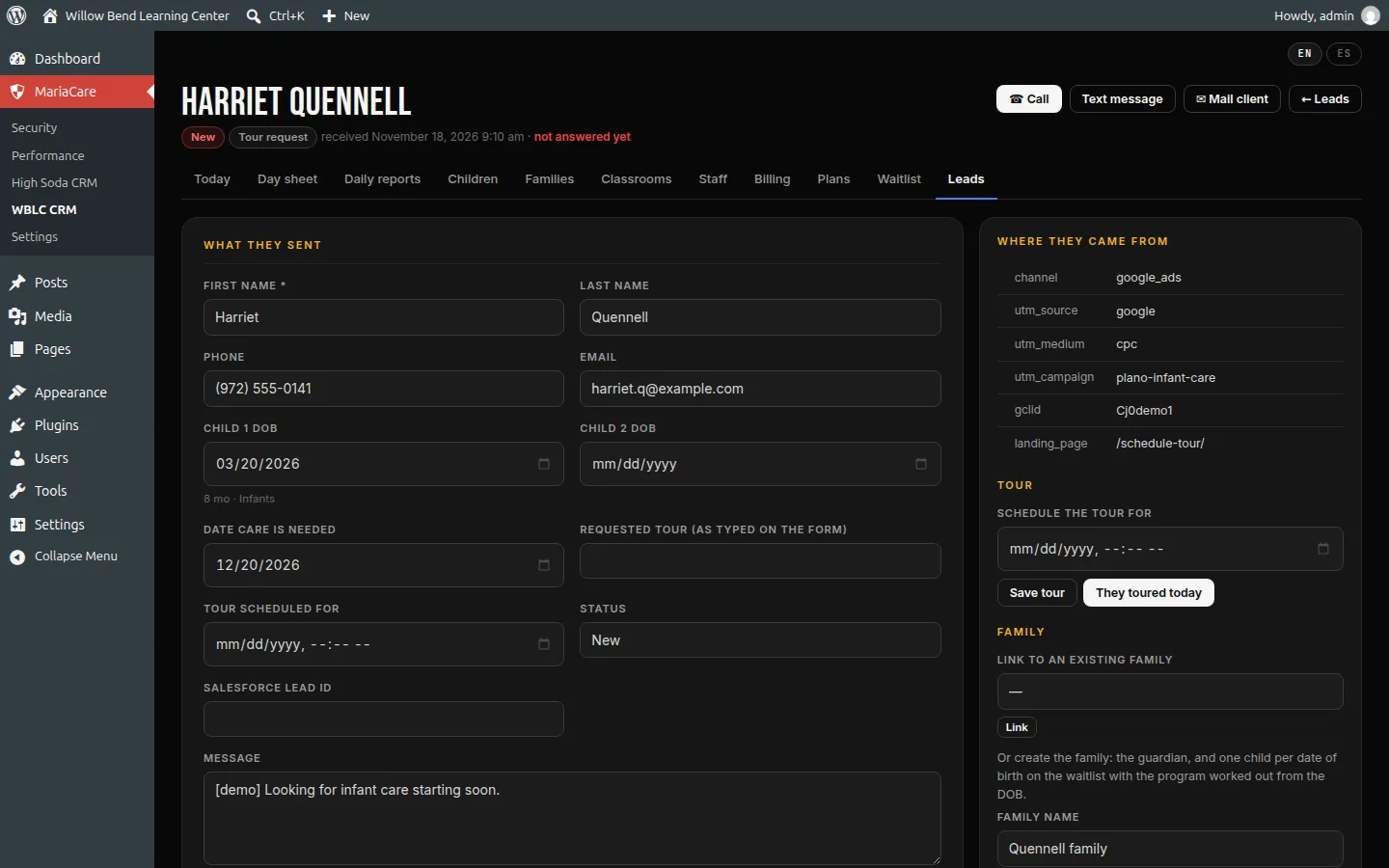
The ad sends the visitor to a page on your WordPress site, not to a form hosted inside the platform. The form carries the campaign name and the Meta click ID (fbclid) in hidden fields and posts straight to your CRM, so the lead arrives with its source on the record, exactly as a Google Ads lead does.

From there nothing changes. Your team works the lead; when it is marked Customer, that record is what MariaCare invoices and what the budget decision is made on. Every customer is traced to the channel and campaign that produced it. Sending those customers back to Meta so its bidding can learn from them is a later, optional step; the billing never depends on it.

1

Demand

Paid ads bring buyers to your site: Google Ads for people already searching, then Meta, LinkedIn and TikTok for buyers who have not searched yet.

2

Capture

The prospect lands on your WordPress site and fills a form.

3

Convert

The lead is worked by call, text and email until it becomes a customer.

4

Validate & bill

Your CRM marks the record Customer. MariaCare invoices.

The fbclid on the lead
The fbclid on the leadA Meta click leaves an fbclid on the landing-page URL; the form stores it on the record with the campaign name, so the customer is traced to Meta and the campaign that produced it.

The routine

What Running Meta Ads Actually Means

CadenceWhat we doWhy it matters to you
WeeklyFrequency and creative fatigue checked; an ad people have seen too often is replaced.Stops your budget showing the same ad to the same person for the tenth time.
WeeklyLanding-page engagement from Meta traffic checked in GA4; a page losing visitors is fixed first.Meta clicks are cheaper than Search clicks and easier to waste on a slow page.
MonthlyBudget between Google, Meta and the other channels rebalanced on cost per customer from your CRM.Money follows customers, not the channel with the most impressions.
MonthlyAudiences refreshed: converted leads excluded, new site visitors added.Retargeting keeps working on the people who have not decided yet.
QuarterlyCreative refreshed from new photos, posts and customer outcomes; prospecting widened or paused.The account grows with your results instead of being set once and left.

How MariaCare handles Meta Ads for you

We run Meta inside the same pipeline and the same fee. The ad account and the page are yours. Retargeting first, prospecting when the numbers earn it, and the budget decided every month on the customers your CRM confirms, not on reach.

  • Pixel installed on your site; audiences built from your own traffic
  • Retargeting before prospecting, on every account
  • Every ad lands on a page on your site with the form that posts to your CRM
  • Campaign and fbclid on every lead record
  • Budget moves logged with the cost-per-customer figure behind them
  • Spend, leads and customers by channel reported together, monthly
Get Started →

Questions

Meta Ads FAQ

Does Meta replace Google Ads?

No. Google Ads captures people who are already searching for what you sell, which is the highest intent you can buy, so it stays first. Meta reaches people before they search and brings back visitors who left your site without filling in the form. Most accounts run both, with Google carrying the larger budget until Meta proves a cost per customer in your CRM.

Is Meta right for a business-to-business company?

Sometimes. It works for retargeting the people who already visited your site, whatever you sell. For finding new buyers it suits consumer and local businesses best; for buyers defined by job title and company, LinkedIn Ads is the better fit.

What does retargeting mean for me?

A visitor comes from an ad or a search, reads your page and leaves without filling in the form. The Meta pixel on your site remembers that visit, and for a short window they see your ad again on Facebook or Instagram with a reason to come back. The audience is built inside Meta, from your own site traffic, under your own ad account.

How do you know which customers came from Meta?

Every form on your site carries the campaign parameters and the Meta click ID (fbclid) into your CRM on the lead record. When your team marks that record Customer, the customer is traced to Meta and to the campaign that produced it, and that is what the monthly budget decision is made on. Sending validated customers back to Meta so it can optimize for them is a later, optional step.

Pay Per Customer

Pay When a Customer Is Validated.
Not Before.

5% of customer value per validated customer when you pay ad spend, 10% when MariaCare pays it. No setup fee, no minimum, no term. A customer who churns within 30 days is never billed.

THE FEE
5% or 10% of Customer Value

Per validated customer. One customer value per account, agreed at signing. Fixed monthly for annual contracts through Talk to Sales.

THE PROOF
Your CRM Decides

A customer counts when your CRM marks Lifecycle Stage = Customer. The count comes from your CRM; every invoice line names the record. Salesforce, HubSpot or Microsoft Dynamics; if you have none, MariaCare sets one up for you.

Get Started → Talk to Sales